
Retinol Serum is one of the most popular skincare ingredients for improving the appearance of fine lines, uneven skin tone, rough texture, and blemishes. However, there is one common problem that stops many people from enjoying its benefits: irritation.
If your skin feels dry, tight, red, itchy, or slightly uncomfortable after starting retinol, you are not alone. These reactions can happen when the skin is introduced to retinol too quickly or when the rest of your skincare routine is too harsh.
The good news is that irritation does not always mean you have to stop using retinol completely. In many cases, you can reduce discomfort by changing how often you apply it, using a gentle moisturizer, protecting your skin from the sun, and avoiding other irritating ingredients at the same time.
For Pakistani skincare users, this is especially important because heat, strong sunlight, humidity, dust, and frequent sun exposure can make an already sensitive skin barrier feel even more stressed.
What Causes Retinol Irritation?
Retinol is a form of vitamin A that works by increasing skin cell turnover and influencing several processes within the skin. Because it is biologically active, your skin may need time to adjust to it.
During this adjustment period, some people experience what is commonly called retinization. This can include temporary dryness, mild peeling, redness, tightness, or sensitivity.
The problem often becomes worse when someone starts with too much product or applies it too frequently.
Other factors can also contribute, including:
- Using a strong retinoid too soon
- Applying retinol every night from the beginning
- Using too much product
- Applying it to already irritated or damaged skin
- Skipping moisturizer
- Using harsh cleansers or physical scrubs
- Combining several active ingredients
- Spending too much time in direct sunlight
- Using hot water on the face
So, if your skin is reacting badly, the answer is not necessarily to abandon retinol. First, look at your entire routine.
How Can You Reduce Retinol Dryness and Redness?
The easiest way to make retinol more comfortable is to slow down and simplify your routine.
1. Start Retinol Slowly
One of the biggest mistakes beginners make is using retinol every night immediately.
Your skin needs time to become accustomed to the ingredient. Instead, start with a small amount once or twice a week. If your skin remains comfortable, you can gradually increase the frequency.
There is no prize for reaching nightly use quickly.
If your skin becomes persistently red, painful, or very dry, reduce the frequency again. A slower routine that you can maintain is usually more useful than an aggressive routine that leaves your skin irritated.
2. Use Only a Small Amount
More retinol does not automatically mean faster results.
For the face, a small amount is generally enough. Applying a thick layer can increase the amount of active ingredient your skin receives without necessarily improving results.
Spread a thin, even layer over the face and avoid applying excessive amounts around sensitive areas.
Be particularly careful around the corners of the nose, lips, and eyes because these areas can become irritated more easily.
3. Apply Retinol to Dry Skin
After cleansing your face, allow your skin to dry completely before applying retinol.
Applying retinol to damp skin may increase penetration and can make irritation more noticeable for some people.
A simple routine can be:
- Gently cleanse your face.
- Pat your skin dry.
- Wait until the skin is completely dry.
- Apply a small amount of retinol.
- Follow with a gentle moisturizer.
This approach can be particularly helpful when you are new to a retinol serum.
4. Never Skip Moisturizer
Moisturizer is not something you need to avoid just because you are using retinol.
In fact, keeping the skin hydrated can make a retinoid routine much easier to tolerate. Look for a gentle moisturizer that supports the skin barrier and does not contain a long list of potentially irritating active ingredients.
Ingredients such as ceramides, glycerin, hyaluronic acid, and other moisturizing agents can help support comfortable, hydrated skin.
If your skin feels tight after using retinol, moisturizing should become an important part of your routine.
5. Try the Moisturizer Sandwich Method
If your skin is particularly sensitive, you can try applying moisturizer before and after retinol.
This is often called the “sandwich” method.
Start with a thin layer of moisturizer, allow it to settle, and then apply a small amount of retinol. Finish with another layer of moisturizer.
This can make retinol easier to tolerate because the moisturizer creates a gentler application environment.
It may be useful for beginners or people who experience noticeable dryness with retinoid products.
6. Avoid Combining Too Many Actives
Another common mistake is building an overly complicated skincare routine.
For example, someone may start retinol while already using exfoliating acids, benzoyl peroxide, vitamin C, scrubs, and other strong products. Even if each product can be useful on its own, combining too many potentially irritating ingredients can overwhelm the skin.
When starting a retinol serum, consider keeping your routine simple.
On retinol nights, focus on:
- Gentle cleanser
- Retinol
- Moisturizer
On other nights, you can use your normal routine if your skin tolerates it.
If you use exfoliating acids, consider using them on separate nights rather than layering them with retinol, particularly when you are still adjusting.
7. Protect Your Skin From the Sun
Sun protection is essential when building a retinoid routine.
Daily exposure to ultraviolet radiation can contribute to premature skin aging, pigmentation, and skin damage. Sensitive skin may also feel more uncomfortable after sun exposure.
This matters even more in Pakistan, where sunlight can be strong for much of the year.
Use a broad-spectrum sunscreen during the daytime and reapply when appropriate, especially if you spend extended periods outdoors.
A good morning routine can be as simple as:
Cleanser → Moisturizer → Sunscreen
Your nighttime routine can then focus on retinol and skin hydration.
Can You Use Retinol Every Night?
Not necessarily.
Some people eventually tolerate retinol well enough to use it frequently, while others prefer using it only a few nights per week.
There is no universal schedule that works for every skin type.
Your skin’s response should guide your routine. If you are comfortable, you may gradually increase use. If you develop persistent irritation, reduce frequency.
Consistency matters more than forcing your skin to use retinol every night.
What Should You Do If Retinol Makes Your Skin Red?
Mild, temporary redness can occur while your skin is adjusting. However, significant or persistent redness should not simply be ignored.
If your skin becomes noticeably irritated, consider taking a break from retinol and focusing on gentle skincare until your skin feels comfortable again.
During this period, avoid unnecessary exfoliation, scrubs, and other strong actives.
Use a mild cleanser, a simple moisturizer, and sunscreen during the day.
Once your skin has recovered, you can consider restarting retinol less frequently and with a smaller amount.
If you experience severe burning, swelling, blistering, significant pain, or a reaction that does not improve, stop using the product and seek advice from a qualified healthcare professional.
What If Retinol Causes Peeling?
Some peeling can occur when the skin is adjusting to retinol, but excessive peeling is not something you need to push through.
Do not scrub peeling skin to remove it. Physical exfoliation can further disturb the skin barrier and increase irritation.
Instead, keep the routine gentle and concentrate on hydration.
A moisturizer can help reduce the uncomfortable feeling of dryness while the skin recovers.
Once your skin becomes comfortable again, restart retinol gradually rather than returning immediately to your previous frequency.
Choosing a Retinol Serum for Your Routine
Not every retinol product is the same. Formulation, concentration, packaging, and the rest of the ingredients can all influence how a product feels on the skin.
When choosing a retinol serum, beginners should avoid assuming that the strongest product is automatically the best option.
A well-formulated product that you can use consistently may be more practical than a very strong product that repeatedly causes irritation.
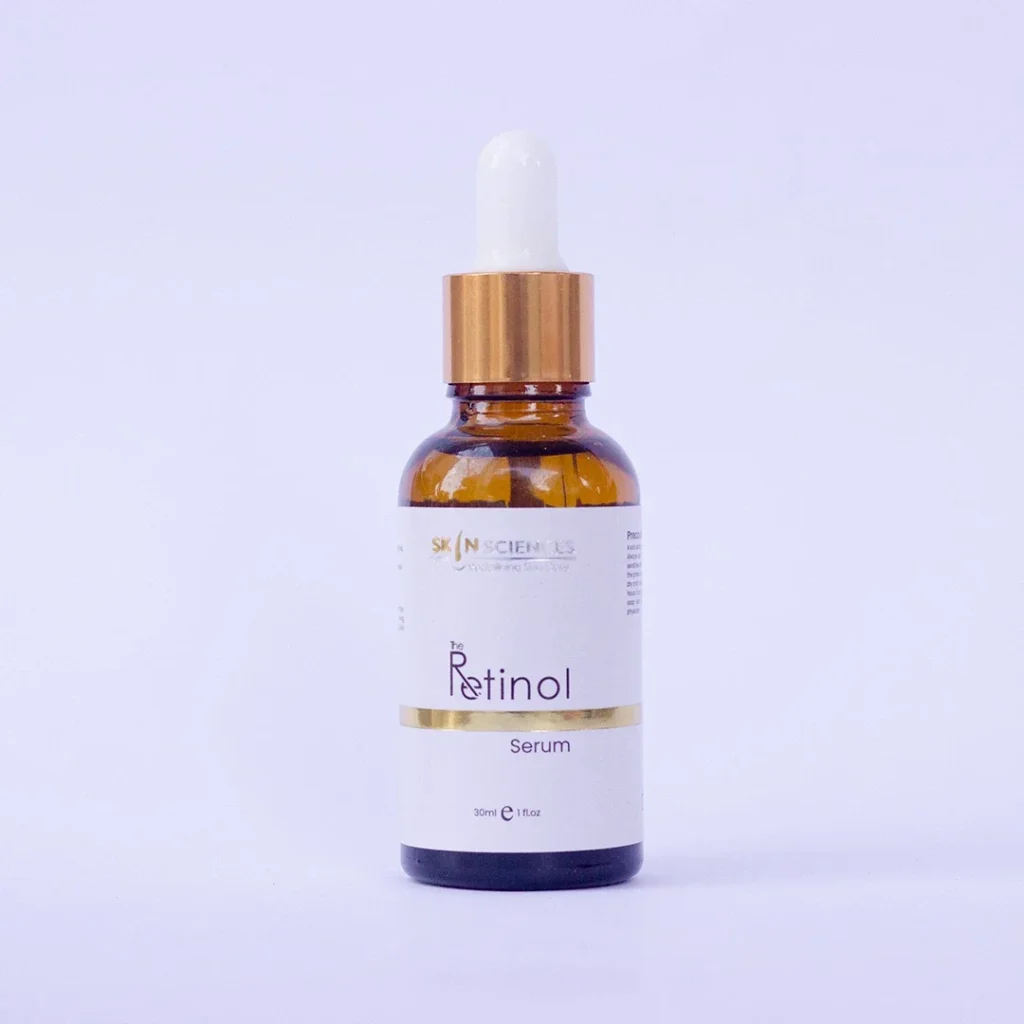
Skin Sciences offers skincare products designed for people who want to build a structured skincare routine. If you are considering a Skin Sciences retinol serum, introduce it gradually rather than changing your entire skincare routine at once.
This makes it easier to understand how your skin responds to the product.
How Often Should Beginners Use Retinol?
There is no single perfect frequency for everyone, but beginners can take a gradual approach.
Start by using retinol once or twice a week. Give your skin time to adjust and monitor how it feels over the following days.
If there is little or no irritation, you can gradually increase usage.
For example:
Weeks 1–2: Once or twice weekly
Weeks 3–4: Two or three times weekly if tolerated
After adjustment: Increase gradually according to your skin’s tolerance
This is only a general framework, not a requirement. Some people may need more time between applications.
The goal is comfortable, consistent use.
What Ingredients Can Help With Retinol Dryness?
If retinol leaves your skin feeling dry, look for gentle hydrating and barrier-supporting ingredients.
Useful ingredients can include:
- Ceramides: Help support the skin barrier.
- Glycerin: Helps attract and retain moisture.
- Hyaluronic acid: Helps hydrate the skin.
- Panthenol: Can provide moisturizing and soothing benefits.
- Squalane: Helps soften and moisturize the skin.
You do not need all of these ingredients in one product. A simple, fragrance-free moisturizer that your skin tolerates well may be enough.
What Ingredients Should You Avoid on Retinol Nights?
You do not necessarily have to eliminate every active ingredient from your skincare routine. However, beginners should be cautious about combining multiple potentially irritating products.
Depending on your skin and the products you use, these may include:
- Strong exfoliating acids
- Physical scrubs
- Strong acne treatments
- Other retinoids
- Products containing high levels of irritating ingredients
If you are unsure whether two products can be used together, introduce them separately instead of adding everything at once.
This makes it much easier to identify what is causing irritation.
Does Retinol Damage the Skin Barrier?
Retinol does not automatically damage the skin barrier when used correctly. However, excessive use can contribute to dryness and irritation, which may make the skin barrier feel compromised.
The difference often comes down to how the product is introduced.
Using too much, too often, or combining several irritating products can make the adjustment period unnecessarily difficult.
A gradual routine combined with adequate moisturizing and sun protection can help improve tolerability.
Common Retinol Mistakes to Avoid
If you want a smoother retinol experience, avoid these common mistakes:
Using it every night immediately: Your skin may need time to adjust.
Applying too much: A larger amount does not guarantee faster results.
Using it on irritated skin: Give damaged or highly sensitive skin time to recover.
Skipping sunscreen: Retinoid routines should go hand in hand with good daytime sun protection.
Scrubbing away peeling skin: This can make irritation worse.
Changing your entire routine at once: Introduce products gradually so you know what your skin tolerates.
Expecting overnight results: Skin changes take time. Give your routine several weeks to work consistently.
Frequently Asked Questions
How long does retinol irritation last?
Mild irritation may improve as the skin adjusts, but the timeline varies between individuals. If irritation is severe, persistent, or worsening, stop using the product and seek professional advice.
Can I use moisturizer before retinol?
Yes. Applying moisturizer before retinol can be useful for people who experience dryness or sensitivity. The moisturizer sandwich method is another option.
Should I stop retinol if my skin is peeling?
If peeling is significant or uncomfortable, taking a break and focusing on gentle hydration can be sensible. Avoid scrubbing the peeling skin.
Can I use retinol in Pakistan’s hot weather?
You can use retinol in Pakistan, but your routine should account for strong sunlight and environmental conditions. Use sunscreen during the day and avoid unnecessary sun exposure.
How much retinol should I apply?
A small amount is generally sufficient for the face. Applying more product does not necessarily produce better or faster results and may increase irritation.
Can beginners use a retinol serum?
Yes, beginners can introduce a retinol serum gradually. Start with infrequent applications and increase only when your skin is comfortable.
Final Words
Retinol can be a valuable addition to a skincare routine, but getting good results is not about using the strongest product as often as possible.
The better approach is patience.
Start slowly, use a small amount, moisturize regularly, protect your skin from the sun, and avoid overwhelming your routine with multiple active ingredients. If irritation appears, reduce your frequency rather than trying to force your skin to adapt.
For Pakistani skincare users, these habits can make a significant difference because daily sun exposure and environmental conditions can add extra stress to the skin.
Whether you choose a Skin Sciences retinol serum or another suitable product, remember that skincare should work with your skin not against it. A simple routine that you can follow consistently is often far more useful than an aggressive routine that leaves your face red, dry, and uncomfortable.