
Large pores are one of those skincare concerns that can be surprisingly difficult to deal with. You may cleanse your face regularly, try different products, and still notice visible pores around your nose, cheeks, or forehead.
This is especially common when the skin produces excess oil. In Pakistan, hot weather, humidity, strong sunlight, and everyday environmental exposure can make oily skin feel even more noticeable.
So, where does niacinamide fit into the picture?
A Niacinamide Serum may help make pores appear less noticeable, particularly when excess oil is contributing to their appearance. However, it is important to understand what niacinamide can and cannot do. It does not permanently close pores or erase them from the skin.
Instead, niacinamide may help improve factors that can make pores look more prominent, such as excess sebum, uneven skin texture, and weakened skin barrier function.
Can Niacinamide Actually Make Large Pores Look Smaller?
Yes, but there is an important distinction.
Niacinamide cannot physically remove or permanently shrink your pores. Pores are natural openings in the skin connected to hair follicles and sebaceous glands. Their size is influenced by factors such as genetics, oil production, skin elasticity, sun exposure, and age.
What niacinamide may do is improve the conditions that make pores appear larger.
For example, excess sebum can make pores more visible. Research has found that topical 2% niacinamide can reduce some measures of facial sebum production, although results have differed between study populations.
When the skin becomes less oily and looks more balanced, pores may appear less obvious.
So, the realistic answer is:
Niacinamide can help reduce the appearance of enlarged pores, but it cannot permanently close or eliminate pores.
That distinction matters because many skincare products make unrealistic promises about pore size.
Why Do Your Pores Look So Large?
Before choosing a product, it helps to understand why your pores may be noticeable in the first place.
Pore appearance can be influenced by several factors, including:
- Excess oil production
- Genetics
- Acne and clogged pores
- Sun damage
- Reduced skin elasticity
- Age
- Certain skincare products
- Skin texture
If your skin produces a lot of sebum, the opening of the hair follicle may become more noticeable.
Blackheads can also make pores appear darker and larger. Acne and inflammation may contribute to changes around the follicle as well.
This is why simply washing your face repeatedly is not necessarily the solution.
How Does Niacinamide Help With Pore Appearance?
Niacinamide, also known as nicotinamide, is a form of vitamin B3 used in many topical skincare products.
It has several properties that make it useful for different skin concerns. Dermatology resources describe topical nicotinamide as having potential benefits for skin barrier function, inflammation, pigmentation, acne, and facial sebum production.
For visible pores, one of its most interesting benefits is its relationship with oil production.
A clinical study examining 2% niacinamide found reductions in certain measures of facial sebum after several weeks of use. The effect was not identical across the different study groups, which is a good reminder that skincare results can vary between individuals.
In simple terms, if excessive oil is making your pores look more noticeable, controlling some of that oil may make the skin look smoother and more refined.
Does Niacinamide Shrink Pores Permanently?
No.
This is one of the biggest misconceptions surrounding pore-care products.
Your pores are normal structures in your skin. They do not work like doors that open and close. You cannot permanently “close” them with a serum.
When people say that a product “shrinks pores,” they usually mean that the pores look less visible.
This can happen because the skin has less surface oil, fewer visible clogs, smoother texture, or improved hydration.
Therefore, a better goal is not to eliminate pores but to make their appearance less noticeable.
Why Do Oily Skin Types Often Have More Visible Pores?
Oily skin and visible pores often go together.
Sebum is the natural oil produced by sebaceous glands. It helps protect the skin, but excessive production can contribute to shine and clogged follicles.
DermNet notes that increased sebum production is one factor associated with enlarged pores. Acne, sun damage, reduced elasticity, and follicle characteristics can also influence pore appearance.
This explains why someone with oily skin may notice enlarged pores more strongly than someone with very dry skin.
It also explains why simply using a pore-minimizing product without addressing excess oil may produce disappointing results.
Is a Niacinamide Serum Good for Oily Skin?
It can be a useful option for oily and combination skin.
Research has specifically investigated topical niacinamide in relation to facial sebum. In one controlled study, 2% niacinamide was associated with lower sebum measurements after several weeks of use.
However, oily skin still needs hydration.
Trying to remove every trace of oil can leave the skin feeling uncomfortable and may encourage people to over-cleanse or use unnecessarily harsh products.
A balanced routine is usually more practical:
Gentle cleanser → Niacinamide Serum → Lightweight moisturizer → Sunscreen
The exact products can vary according to your skin type.
Can Niacinamide Help With Blackheads and Clogged Pores?
Niacinamide may be helpful as part of a routine for oily, blemish-prone skin, particularly because of its relationship with sebum and inflammation.
However, it should not be viewed as a powerful pore-cleaning treatment on its own.
Blackheads form when material accumulates within a hair follicle. If your main concern is persistent blackheads, ingredients specifically designed to help with clogged pores may be more appropriate.
For example, salicylic acid is commonly used in routines targeting clogged pores and acne. You do not necessarily need to combine every active ingredient, though.
If your skin is sensitive, introducing one active at a time makes it easier to see how your skin responds.
Can Niacinamide Improve Skin Texture?
Potentially, yes.
Pore visibility is not only about pore size. The overall texture of the surrounding skin also affects how noticeable pores appear.
If your skin is rough, congested, excessively oily, or uneven, pores may stand out more.
Niacinamide can support the skin barrier and may help with several aspects of skin appearance. DermNet reports that topical nicotinamide can improve barrier function by reducing water loss from the outer layer of skin.
Healthy, well-hydrated skin can look smoother and more balanced.
That does not mean niacinamide will instantly transform skin texture. Consistent use and a well-designed routine matter more than expecting overnight changes.
What Niacinamide Percentage Is Best for Visible Pores?
There is no single concentration that is automatically best for everyone.
Many cosmetic products contain concentrations higher than those used in some clinical studies, but a higher percentage does not automatically mean better results.
In fact, using a very concentrated product simply because you believe “more is better” can be unnecessary.
The 2% niacinamide study discussed earlier showed an effect on certain measures of facial sebum after several weeks.
Other research has investigated higher concentrations for different skin concerns, so the evidence cannot be reduced to one universally perfect percentage.
For beginners, choosing a well-formulated product and introducing it gradually is often more sensible than chasing the highest number on the label.
How Should You Use a Niacinamide Serum for Pores?
Consistency is more important than applying a large amount.
A simple routine could look like this:
Morning
1. Cleanse gently
Remove excess oil and impurities without aggressively scrubbing your skin.
2. Apply your Niacinamide Serum
Use the amount recommended by the product and spread it evenly over clean skin.
3. Moisturize
Choose a moisturizer appropriate for your skin type.
4. Apply sunscreen
Daily sun protection is important because UV exposure can contribute to skin aging and may make pore appearance more noticeable over time. Sun damage is also recognized as one factor associated with enlarged pores.
Evening
You can repeat a simple routine:
Cleanser → Niacinamide Serum → Moisturizer
If you use other active ingredients, introduce them thoughtfully rather than layering several strong products immediately.
How Long Does Niacinamide Take to Improve Pore Appearance?
Do not expect your pores to look dramatically different after one or two applications.
Skincare ingredients generally need consistent use before you can fairly judge their effect.
For example, clinical research on 2% niacinamide observed changes in sebum-related measurements over periods of several weeks rather than immediately.
Your personal results may depend on:
- Your skin type
- Sebum production
- Existing acne
- Product formulation
- Concentration
- How consistently you use it
- Other products in your routine
- Sun exposure
Take photos under similar lighting if you want to compare changes. Looking at your skin under different lighting every day can make small differences difficult to judge.
Can Niacinamide Work for Combination Skin?
Yes, it can be a practical ingredient for combination skin.
Combination skin often has more oil around the forehead, nose, and chin while the cheeks may feel normal or dry.
Because niacinamide can be useful for oil-related concerns while also supporting skin barrier function, it may fit into a balanced routine.
However, you do not need to treat every part of your face exactly the same way.
If your cheeks are dry, use a more hydrating moisturizer there. If your T-zone becomes oily, you can focus your oil-control routine on those areas.
What About Niacinamide for Sensitive Skin?
Many people tolerate topical niacinamide well, but sensitive skin can react to almost any skincare product.
If you are introducing a new Niacinamide Serum, start cautiously.
Apply a small amount according to the product instructions and monitor your skin. If you experience significant burning, swelling, persistent redness, or worsening irritation, discontinue the product and seek professional advice.
Also remember that irritation does not always mean niacinamide itself is the problem. The complete formulation may contain other ingredients that your skin does not tolerate.
Can You Use Niacinamide With Other Skincare Ingredients?
Niacinamide can fit into many different skincare routines.
People commonly use it alongside hydrating ingredients and other active ingredients, but your routine should be based on your skin’s tolerance and goals.
For example, someone with oily, congested skin may want to use niacinamide alongside a carefully planned exfoliation routine.
Someone concerned about signs of aging may use niacinamide with a retinoid.
But there is no need to introduce everything at the same time.
A simple routine makes it easier to identify what is helping and what is causing irritation.
Is Niacinamide Better Than Salicylic Acid for Pores?
Not necessarily. They serve different purposes.
Niacinamide may help with oil regulation, barrier support, and inflammation. Evidence also supports its potential role in reducing facial sebum.
Salicylic acid, on the other hand, is commonly used to address clogged pores and acne.
Your choice should depend on what is actually making your pores look noticeable.
If excess oil is the main issue, niacinamide may be useful.
If blackheads and congestion are the bigger problem, another ingredient may be more appropriate.
Sometimes a carefully designed routine can include both, but sensitive skin should not be overloaded with active ingredients.
What Makes Pores Look Smaller Besides Niacinamide?
If you want your pores to appear less noticeable, think beyond one ingredient.
A complete approach can include:
Control excess oil: Avoid unnecessarily heavy products if they make your skin more greasy.
Keep pores clear: Use appropriate acne or exfoliating products if you have persistent congestion.
Protect against UV exposure: Daily sunscreen can help protect against photoaging.
Maintain hydration: Dehydrated, rough-looking skin can make texture more noticeable.
Avoid harsh cleansing: Scrubbing aggressively can irritate the skin without permanently reducing pore size.
Stay consistent: Give a routine enough time before deciding whether it works.
Pore appearance is influenced by multiple factors, so a single serum should not be expected to solve everything.
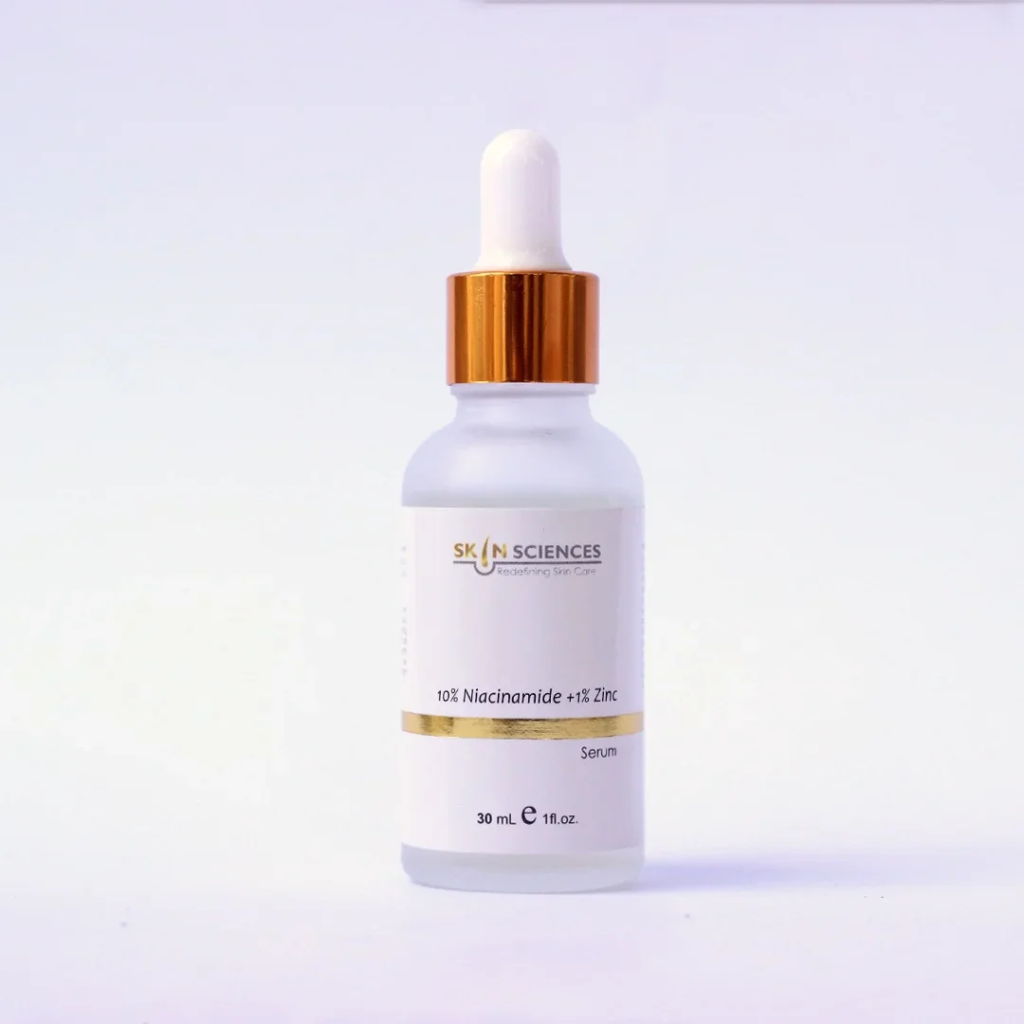
Can Skin Sciences Niacinamide Serum Help With Visible Pores?
If you are looking to add niacinamide to your skincare routine, Skin Sciences can be considered as one option.
A Skin Sciences Niacinamide Serum can be incorporated into a routine designed around concerns such as excess oil, uneven-looking texture, and visible pores.
However, the product should be used realistically. No serum can permanently remove pores, and individual results vary.
The best approach is to use the product consistently, follow its directions, moisturize appropriately, and protect your skin from the sun.
Common Mistakes When Trying to Reduce Pore Appearance
Washing your face too many times
If your skin looks oily, it can be tempting to wash it repeatedly.
But aggressive cleansing can irritate the skin and leave it feeling dry or uncomfortable.
Using too many pore products
A cleanser, toner, exfoliant, mask, serum, and multiple acids are not automatically better.
Your skin may respond better to a simple routine.
Expecting instant results
Pores will not disappear overnight.
Give your skincare routine enough time to evaluate changes.
Skipping moisturizer
Oily skin still needs hydration.
Choose a lightweight moisturizer instead of avoiding moisturizer completely.
Ignoring sunscreen
Sun exposure can contribute to skin aging and is one factor associated with more noticeable pores.
Frequently Asked Questions
Does niacinamide permanently shrink pores?
No. Niacinamide cannot permanently close or eliminate pores. It may help reduce their appearance by addressing factors such as excess oil and supporting overall skin condition.
How often should I use a Niacinamide Serum?
Many people can use niacinamide regularly, but follow your product’s directions and consider your skin’s tolerance. If irritation occurs, reduce use or stop and reassess your routine.
Is niacinamide good for oily skin?
It can be. Clinical research has found that topical niacinamide can reduce certain measures of facial sebum, making it a useful ingredient to consider for oily skin.
Can niacinamide remove blackheads?
Niacinamide may support oily and blemish-prone skin, but it is not a dedicated blackhead-removal treatment. Persistent congestion may require other ingredients or professional guidance.
Can I use niacinamide every day?
Many people tolerate daily topical niacinamide, but individual sensitivity varies. Start according to the product instructions and adjust if your skin becomes irritated.
Is niacinamide suitable for Pakistani skin?
Niacinamide can be used by Pakistani skincare users, including people with oily or combination skin. Your routine should still account for your individual skin type, climate, sun exposure, and sensitivity.
Final Words
Yes, niacinamide may make large pores look less noticeable, but it does not permanently shrink or close them.
Its potential value comes from improving some of the factors that contribute to visible pores, particularly excess sebum and overall skin condition. Research has shown that topical niacinamide can reduce certain measures of facial sebum, while dermatology resources also recognize its role in supporting the skin barrier and addressing oily, blemish-prone skin.
For Pakistani skincare users, a Niacinamide Serum can be a practical addition to a simple routine, especially if excess oil and visible pores are among your main concerns.
The key is to keep expectations realistic.
You cannot erase your pores and you do not need to. The goal is healthier, balanced-looking skin where pores are less noticeable. With consistent skincare, appropriate hydration, sun protection, and the right active ingredients for your specific concern, you can work toward a smoother and more refined-looking complexion.