
Fine lines are one of the first visible signs that your skin is changing with age. You may notice tiny lines around your eyes, forehead, cheeks, or mouth, especially when your skin feels dry or dehydrated.
While fine lines are a natural part of aging, certain skincare habits can make them look more noticeable. Dehydration, sun exposure, environmental stress, and changes in skin elasticity can all affect how smooth your complexion appears.
This is where hyaluronic acid has gained so much attention.
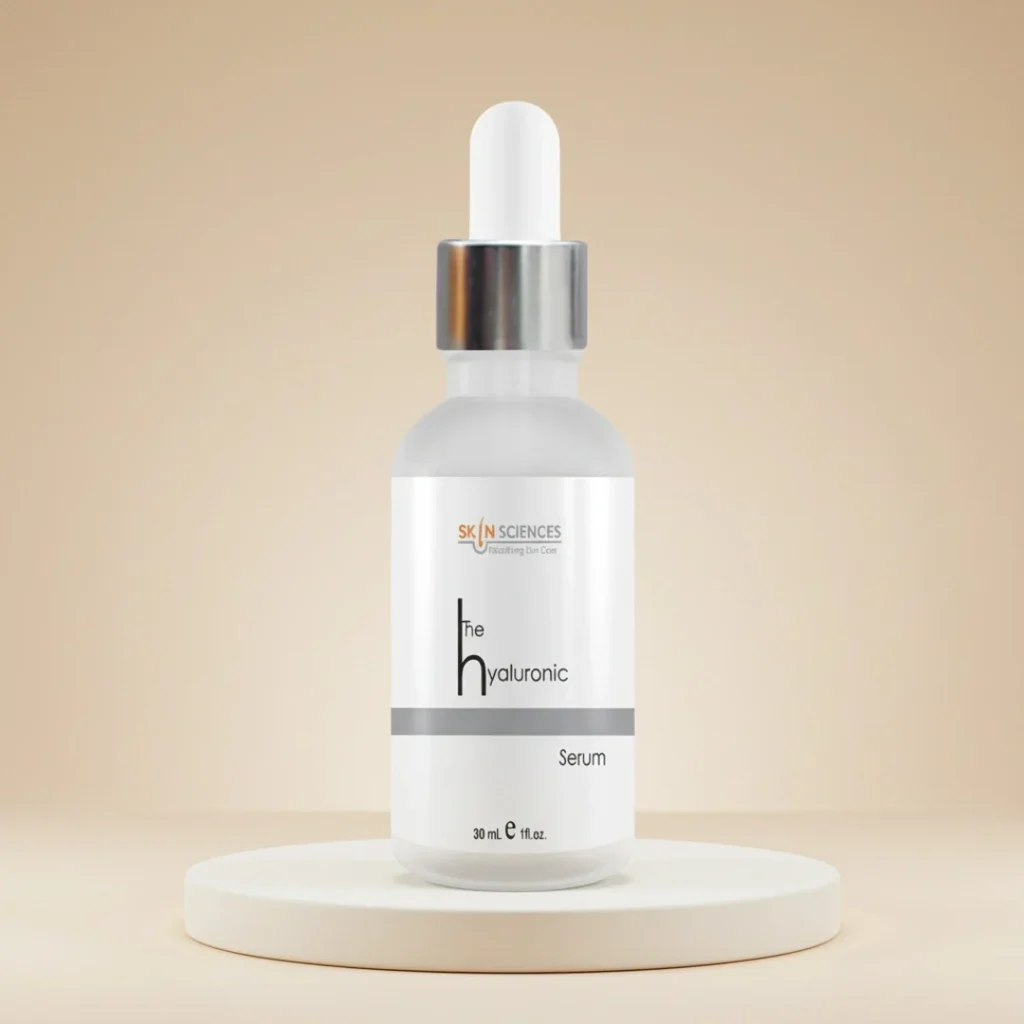
A Hyaluronic Serum can help increase the skin’s moisture content, making the surface look smoother and more plump. When the skin is properly hydrated, fine lines caused or emphasized by dryness may appear less noticeable.
But can hyaluronic acid actually reduce fine lines?
The short answer is yes, it may reduce their appearance, particularly by improving hydration and skin smoothness but it cannot permanently erase wrinkles or stop the natural aging process.
Let’s look at what hyaluronic acid can realistically do for your skin and how to use it effectively.
What Is Hyaluronic Acid?
Hyaluronic acid, often abbreviated as HA, is a naturally occurring substance found in the body, including the skin.
One of its important properties is its ability to bind and retain water. This makes it a popular ingredient in moisturizers, serums, and other skincare products designed to improve hydration.
As skin ages, changes in its composition and water-holding capacity can contribute to dryness, loss of elasticity, and visible signs of aging. Topical hyaluronic acid is therefore widely used in skincare for hydration and skin-rejuvenating benefits.
A topical HA product does not work like an injectable filler.
Instead, a serum applied to the skin mainly works at the surface and within the upper layers, depending on its formulation and molecular characteristics.
Can Hyaluronic Acid Really Reduce Fine Lines?
Yes, topical hyaluronic acid may make fine lines look less noticeable.
The key is hydration.
When skin becomes dehydrated, it can look rough, dull, and creased. Small lines may appear more visible because the skin surface does not look as smooth.
Adding moisture can temporarily plump the outer layers of the skin and improve its appearance.
Clinical research supports this effect. One study of a topical HA serum found improvements in hydration along with investigator-rated improvements in fine lines, wrinkles, skin texture, and dryness after continued use.
Another study examining different molecular weights of topical hyaluronic acid found improvements in skin hydration and elasticity, with certain lower-molecular-weight formulations also showing reductions in measured wrinkle depth after 60 days.
So, while a serum cannot make a deep wrinkle disappear permanently, it can help your skin look smoother and more hydrated.
How Does Hyaluronic Acid Make Fine Lines Look Less Visible?
Think of your skin like a dry sponge.
When a sponge loses water, it becomes smaller, rougher, and less flexible. When it absorbs water, it becomes fuller and smoother.
Skin is obviously much more complex than a sponge, but the comparison helps explain why hydration can change the appearance of fine lines.
Hyaluronic acid acts as a humectant, meaning it helps attract and retain water.
When your skin becomes better hydrated, the surface may look:
- Smoother
- Softer
- More plump
- Less rough
- More comfortable
- More radiant
As a result, very fine dehydration lines may become less noticeable.
What Types of Fine Lines Can Hyaluronic Acid Help?
Hyaluronic acid may be particularly helpful when fine lines are made more visible by dryness or dehydration.
For example, you might notice small lines around the eyes or forehead becoming more obvious when your skin feels tight.
Hydration can improve the overall appearance of these lines.
However, deeper wrinkles caused by significant collagen loss, repeated facial movement, or long-term sun exposure are different.
A hydrating serum may improve their appearance, but it should not be expected to remove them completely.
This distinction is important when choosing skincare.
Can Hyaluronic Acid Prevent Wrinkles?
Hyaluronic acid should not be considered a complete wrinkle-prevention solution.
Aging is influenced by genetics, natural changes in the skin, sun exposure, environmental factors, and lifestyle.
However, maintaining good hydration and protecting your skin from UV radiation can be important parts of a long-term skincare routine.
If your main goal is to reduce visible signs of premature aging, think beyond one serum.
A practical routine can include:
Gentle cleanser → Hyaluronic Serum → Moisturizer → Sunscreen
At night, you can use a similar routine and add other targeted ingredients if your skin tolerates them.
Why Does Dehydrated Skin Show More Fine Lines?
Dehydrated skin lacks enough water.
This is different from dry skin, which generally refers to a skin type associated with insufficient oil or lipids.
You can actually have oily skin and still experience dehydration.
When the skin lacks water, it may feel tight and look dull or rough. Fine lines can become more noticeable because the skin surface does not appear as smooth.
This is why people sometimes notice sudden fine lines during periods of dehydration, harsh weather, excessive cleansing, or after using irritating skincare products.
A hydrating routine can help improve the appearance of these temporary dehydration-related lines.
Is Hyaluronic Serum Good for Dry Skin?
Yes, a Hyaluronic Serum can be useful for dry skin, especially when combined with a moisturizer that helps maintain hydration.
However, hyaluronic acid alone may not be enough for very dry skin.
A serum primarily adds a hydrating step. A moisturizer can provide additional ingredients that support the skin barrier and help reduce moisture loss.
For dry skin, you could use:
Cleanser → Hyaluronic Serum → Moisturizer
During the day, finish with sunscreen.
This combination is often more practical than applying several different hydrating serums.
Can Oily Skin Use Hyaluronic Serum?
Absolutely.
Hyaluronic acid is not an oil, so oily skin does not automatically need to avoid it.
In fact, oily skin can become dehydrated too.
If your face produces plenty of oil but still feels tight after cleansing, dehydration may be part of the problem.
A lightweight Hyaluronic Serum can provide hydration without necessarily adding the heavy, greasy feeling associated with some richer creams.
For oily or combination skin, look for a lightweight formulation and follow it with a moisturizer suitable for your skin type.
Does Hyaluronic Acid Increase Collagen?
This is an area where it is important to distinguish between different forms and applications of hyaluronic acid.
Topical hyaluronic acid is primarily valued in skincare for its hydrating and skin-conditioning properties. Some research has investigated effects beyond surface hydration, but you should not assume that applying an HA serum has the same effect as injectable HA treatments.
For everyday skincare, the safest expectation is:
Hyaluronic acid helps hydrate the skin and can improve the appearance of fine lines associated with dryness and skin texture.
It should not be marketed as an instant collagen replacement.
What Is the Best Way to Apply Hyaluronic Serum?
Application technique matters.
Many people apply their hydrating serum and immediately move on to the next product. That’s fine, but there is a simple routine that can make sense for a humectant-based product.
1: Cleanse Gently
Start with a gentle cleanser.
Avoid using very hot water or scrubbing your face aggressively.
2: Apply Your Hyaluronic Serum
Apply the serum according to the product instructions.
Many people prefer applying hyaluronic acid to slightly damp skin, although the exact instructions can vary between formulations.
3: Follow With Moisturizer
This is an important step.
A moisturizer can help maintain the comfortable, hydrated feel created by your serum.
4: Use Sunscreen in the Morning
If you’re using your serum during the day, finish with broad-spectrum sunscreen.
Sun exposure is a major contributor to visible skin aging, so hydration alone is not enough for an anti-aging routine.
How Often Should You Use Hyaluronic Serum?
Many people can use a Hyaluronic Serum once or twice daily, depending on the product and their skin’s needs.
Because hyaluronic acid is primarily a hydrating ingredient, it can fit easily into both morning and evening routines.
A simple schedule might be:
Morning: Cleanser → Hyaluronic Serum → Moisturizer → Sunscreen
Night: Cleanser → Hyaluronic Serum → Moisturizer
If you are introducing other active ingredients at the same time, introduce them one at a time.
That makes it easier to understand how your skin responds to each product.
How Long Does Hyaluronic Acid Take to Work?
One interesting feature of hyaluronic acid is that hydration can improve relatively quickly.
A clinical study of a topical HA serum reported increased hydration shortly after application, with continued improvements observed over several weeks. The same study also reported improvements in fine lines, wrinkles, texture, and dryness during the study period.
However, your results may differ.
The product formulation, HA concentration, molecular weight, other ingredients, skin condition, and consistency of use all matter.
You may notice a temporary plumping effect quickly, while longer-term improvements in overall skin appearance can require consistent use.
Does Higher Hyaluronic Acid Mean Better Results?
Not necessarily.
This is a common skincare misconception.
A product containing a very high percentage of hyaluronic acid is not automatically better than one with a lower concentration.
The complete formulation matters.
Hyaluronic acid can exist in different molecular weights, and research has investigated how different molecular sizes behave when applied topically. One clinical study found that different HA molecular weights improved hydration and elasticity, while certain lower-molecular-weight formulations showed greater improvement in measured wrinkle depth.
Therefore, don’t choose a product simply because its label highlights a bigger percentage.
Look at the overall formulation and choose a product that your skin can tolerate consistently.
Can Hyaluronic Serum Help Fine Lines Around the Eyes?
The skin around the eyes is delicate and can show dehydration lines easily.
A hydrating serum may help improve the appearance of fine lines associated with dryness.
However, the eye area also requires extra care.
Avoid getting the serum directly into your eyes and follow the product’s instructions regarding eye-area use.
If you have persistent irritation, swelling, or significant changes around the eyes, stop using the product and seek professional advice.
Can Hyaluronic Acid Help With Sun-Damaged Skin?
Hyaluronic acid can improve hydration and skin appearance, but it should not be considered a treatment that reverses all sun damage.
UV exposure can contribute to pigmentation, wrinkles, loss of elasticity, and other signs of photoaging.
A hydrating serum may support the appearance of the skin, but preventing further UV damage is equally important.
For people living in Pakistan, daily sun protection deserves particular attention because outdoor exposure can be significant throughout the year.
Use sunscreen consistently and consider additional protective measures such as shade, clothing, and avoiding unnecessary direct sunlight.
Can You Use Hyaluronic Acid With Retinol?
Yes, hyaluronic acid is commonly used alongside retinoids as part of a skincare routine.
Retinoids can sometimes cause dryness or irritation, particularly when someone is new to them.
Adding a hydrating serum and moisturizer can help make a routine more comfortable.
For example:
Cleanser → Hyaluronic Serum → Retinoid → Moisturizer
The exact order can vary depending on the products and your skin’s tolerance.
If your retinoid is causing significant irritation, don’t simply add more products. Reduce the irritating product’s frequency and consider speaking with a dermatologist if the reaction is persistent.
Can You Use Hyaluronic Acid With Vitamin C?
Yes.
Vitamin C and hyaluronic acid serve different purposes, so they can complement each other in a skincare routine.
Vitamin C is commonly used for antioxidant and pigmentation-related benefits, while hyaluronic acid focuses primarily on hydration.
A morning routine could therefore look like:
Cleanser → Vitamin C → Hyaluronic Serum → Moisturizer → Sunscreen
However, you don’t need to use multiple serums if your skin already feels comfortable with a simple routine.
More products do not automatically mean better skin.
What About Hyaluronic Serum for Pakistani Skin?
Pakistani skincare users deal with a wide range of climates and skin types.
Heat, humidity, dry weather, air conditioning, sun exposure, and frequent cleansing can all influence how the skin feels.
Hyaluronic acid can be useful because hydration is relevant to almost every skin type.
However, the best approach depends on your individual skin.
If you have oily skin, choose a lightweight formulation.
If your skin is dry, combine the serum with a suitable moisturizer.
If your skin is sensitive, introduce new products gradually.
If your main concern is pigmentation or premature aging, combine hydration with consistent sun protection and other appropriate skincare ingredients.
What Makes Skin Sciences Hyaluronic Serum Worth Considering?
If you’re looking to add a hydrating serum to your routine, Skin Sciences is one option you can consider.
A Skin Sciences Hyaluronic Serum can fit into a routine focused on improving hydration and the appearance of dryness-related fine lines.
However, no serum should be expected to permanently erase wrinkles.
The most useful approach is to think about the product as part of a complete skincare routine.
Use it consistently, moisturize afterward when needed, protect your skin from the sun, and give your routine enough time to show its potential.
Common Hyaluronic Acid Mistakes to Avoid
Applying too much serum
You do not need to cover your face with a thick layer.
Follow the product’s recommended amount.
Skipping moisturizer
A hydrating serum and moisturizer perform different roles.
If your skin needs additional barrier support, don’t automatically replace your moisturizer with serum.
Expecting permanent wrinkle removal
Hyaluronic acid may temporarily plump and improve the appearance of fine lines, but it cannot permanently erase wrinkles.
Forgetting sunscreen
Hydration cannot protect your skin from UV radiation.
Daily sunscreen remains an important part of an anti-aging routine.
Using too many products
If your routine contains several serums, acids, retinoids, masks, and exfoliators, it can become difficult to know what your skin actually needs.
Keep your routine simple enough to maintain consistently.
Frequently Asked Questions
Can hyaluronic acid remove fine lines?
No skincare serum can guarantee permanent removal of fine lines. However, topical hyaluronic acid can improve hydration and may make fine lines look less noticeable, especially when dryness contributes to their appearance. Clinical studies have reported improvements in hydration and fine-line appearance with topical HA formulations.
How often should I use a Hyaluronic Serum?
Many people can use a Hyaluronic Serum once or twice daily. Follow the product’s instructions and adjust according to your skin’s needs.
Can hyaluronic acid make skin look younger?
Better hydration can make skin look smoother, softer, and more plump. This may create a fresher appearance, but hyaluronic acid does not stop natural aging.
Can oily skin use hyaluronic acid?
Yes. Oily skin can still be dehydrated. A lightweight Hyaluronic Serum can provide hydration without necessarily making the skin feel excessively greasy.
Should I apply hyaluronic acid before moisturizer?
Generally, yes. A common routine is cleanser, Hyaluronic Serum, moisturizer, and sunscreen in the morning.
Can I use hyaluronic acid with retinol?
Yes. Hyaluronic acid is commonly included in routines alongside retinoids because it provides hydration. If retinol causes persistent irritation, however, adjust the retinoid routine rather than trying to cover the irritation with more skincare products.
Does hyaluronic acid permanently plump wrinkles?
No. The plumping effect associated with hydration is not the same as a permanent filler treatment. Topical HA can improve hydration and the appearance of fine lines, but deeper wrinkles require different approaches.
Final Words
So, can hyaluronic acid reduce the appearance of fine lines?
Yes, it can particularly when dehydration makes those lines more visible.
A Hyaluronic Serum attracts and helps retain water, improving skin hydration and creating a smoother, more plump-looking surface. Clinical evidence has found improvements in hydration and, in some topical formulations, fine lines, wrinkles, texture, and skin elasticity.
But expectations matter.
Hyaluronic acid cannot permanently erase wrinkles, reverse every sign of aging, or replace sunscreen. Its greatest value in a daily routine is hydration and improved skin appearance.
For Pakistani skincare users, a simple routine can go a long way:
Cleanse → Hyaluronic Serum → Moisturize → Sunscreen
If you choose a Skin Sciences Hyaluronic Serum, focus on consistent use and combine it with good skincare habits rather than expecting overnight transformation.
Fine lines are a normal part of having skin. The goal is not to make your face look artificially perfect. It is to keep your skin hydrated, comfortable, protected, and healthy-looking as it changes over time.