
You go to bed hoping to wake up with fresh, healthy-looking skin. But sometimes the opposite happens.
Your face may look tired, dry, rough, or dull when you look in the mirror the next morning. Your skin can even appear less radiant than it did before you went to sleep.
So, why does this happen?
Morning dullness can have several causes. Dehydration, dry air, dead skin cells, an inconsistent skincare routine, poor product choices, and environmental factors can all influence how your skin looks when you wake up.
The good news is that dull-looking skin in the morning does not always mean there is something seriously wrong with your skin.
A consistent nighttime routine can help maintain hydration and support the skin barrier while you sleep. This is where a suitable Night Cream can become useful.
But before choosing one, it helps to understand what may actually be causing that dull appearance.
What Does “Dull Skin” Mean?
Dull skin generally refers to a complexion that looks tired, flat, rough, or less radiant than usual.
Healthy-looking skin does not necessarily mean perfectly smooth or shiny skin. Everyone’s complexion naturally varies.
However, if your skin regularly looks dull when you wake up, it may be worth looking at your nighttime routine.
Common signs associated with dull-looking skin include:
- Rough or uneven texture
- Dry patches
- A tired-looking complexion
- Flakiness
- Dehydration
- More noticeable fine lines
- Uneven-looking tone
These signs can appear for different reasons, so there is no single product that works for everyone.
Why Does Your Skin Look Dull in the Morning?
Several factors can contribute to morning dullness.
Let’s look at some of the most common ones.
1. Your Skin May Be Dehydrated
One of the simplest explanations for dull-looking skin is dehydration.
Dehydrated skin lacks water. This is different from dry skin, which generally refers to a skin type associated with lower oil production.
Even oily or combination skin can become dehydrated.
When the skin does not retain enough water, it may look:
- Less plump
- Rougher
- Tighter
- More tired
- Less radiant
Fine lines may also become more noticeable when the skin is dehydrated.
A moisturizer can help improve hydration by using ingredients such as humectants, emollients, and occlusives.
This is one reason applying a suitable Night Cream before bed can be helpful.
2. Your Skin Loses Water Overnight
Your skin does not stop losing water simply because you are asleep.
Water can gradually move from the skin toward the surrounding environment, a process commonly referred to as transepidermal water loss.
If your skin barrier is not functioning well, moisture loss can become more noticeable.
This can leave your face feeling tight or dry when you wake up.
A suitable moisturizer can help reduce water loss by supporting the skin’s protective barrier.
For dry skin, a richer nighttime moisturizer may feel particularly comfortable.
For oily skin, a lightweight formulation may be a better choice.
3. Dead Skin Cells Can Affect Your Skin’s Appearance
Your skin naturally sheds dead skin cells.
When these cells accumulate on the surface, your complexion can sometimes look rough or less radiant.
This does not mean you need to aggressively scrub your face every night.
Over-exfoliating can actually irritate the skin and weaken its barrier.
Instead, use gentle cleansing and, if appropriate for your skin, a carefully chosen exfoliating product according to its instructions.
Your nighttime routine should focus on maintaining healthy skin rather than trying to remove every dead skin cell.
4. Your Skin Barrier May Need More Support
The skin barrier helps keep moisture inside the skin and provides protection against external environmental factors.
When the barrier becomes compromised, the skin may become dry, rough, irritated, or more sensitive.
This can make your complexion appear dull.
Factors that may affect the barrier include:
- Harsh cleansers
- Excessive exfoliation
- Very hot water
- Overuse of active ingredients
- Cold or dry weather
- Environmental exposure
A good nighttime moisturizer can support the skin by providing hydrating and conditioning ingredients.
However, if your skin is persistently irritated, simply adding a thicker cream may not solve the underlying problem.
You may need to simplify your routine.
Does Sleep Affect How Your Skin Looks?
Sleep and skin are closely connected.
During sleep, your body goes through important physiological processes, and poor sleep can affect how your skin looks.
Research has associated inadequate sleep with changes in skin appearance and barrier function. In one study, poor sleepers showed differences in skin barrier recovery and perceived attractiveness compared with good sleepers.
This does not mean one late night will permanently damage your skin.
But if you regularly get insufficient or poor-quality sleep, your complexion may appear more tired.
Skincare cannot completely compensate for consistently poor sleep.
A healthy nighttime routine should therefore include both appropriate skincare and good sleep habits.
Can a Night Cream Help Dull Skin?
Yes, a suitable Night Cream can help if dryness or dehydration is contributing to your dull-looking complexion.
A moisturizer can increase skin hydration and make the surface feel softer and smoother.
Better hydration can also temporarily improve the appearance of fine lines and rough texture.
However, a Night Cream cannot solve every cause of dullness.
If your skin looks dull because of persistent pigmentation, acne, irritation, or another skin condition, you may need a more targeted approach.
Think of moisturizer as the foundation of your nighttime routine—not the entire solution.
How Does Night Cream Support the Skin Overnight?
A nighttime moisturizer can help by providing ingredients that:
- Add hydration
- Reduce moisture loss
- Soften rough skin
- Support the skin barrier
- Improve the appearance of dryness
- Make the skin feel more comfortable
The exact benefits depend on the formulation.
Some products are simple moisturizers, while others contain ingredients targeting specific concerns.
This is why reading the ingredient list and understanding your skin type is more useful than choosing a product simply because it is labeled “night cream.”
What Ingredients Can Help With Dull-Looking Skin?
You do not need every possible skincare ingredient in one product.
A few well-chosen ingredients can be enough.
Hyaluronic Acid
Hyaluronic acid is a humectant that helps attract and retain water.
Improving hydration can make the skin appear smoother and more plump.
Glycerin
Glycerin is another widely used humectant.
It helps attract water and is commonly included in moisturizing products.
Ceramides
Ceramides are lipids naturally found in the skin.
They are commonly used in moisturizers designed to support the skin barrier.
Niacinamide
Niacinamide is a versatile skincare ingredient that may help support the skin barrier and improve the appearance of uneven skin tone.
It can be particularly useful when dullness is accompanied by other concerns.
Emollients
Emollient ingredients help soften the skin and improve its texture.
The best formulation will depend on whether your skin is dry, oily, combination, or sensitive.
Can Dry Skin Cause Morning Dullness?
Yes.
Dry skin often looks rougher and less radiant because it lacks sufficient surface oils and may have a compromised moisture barrier.
You might notice:
- Flaking
- Tightness
- Rough patches
- Fine lines
- A dull appearance
Using a suitable moisturizer at night can help improve comfort and hydration.
If your skin is very dry, you may prefer a richer Night Cream containing a combination of humectants, emollients, and occlusive ingredients.
What About Oily Skin?
Oily skin can also look dull.
Many people assume that oily skin has enough moisture because it produces more sebum.
But oil and water are not the same thing.
Your skin can produce excess oil while still being dehydrated.
If you have oily skin, choose a lightweight moisturizer rather than skipping hydration altogether.
A non-comedogenic formula may also be preferable if you are prone to clogged pores or breakouts.
Can Your Night Cream Be Too Heavy?
Yes.
A very rich cream may not feel comfortable on every skin type.
If you have oily or acne-prone skin, a heavy formula may feel greasy or contribute to clogged pores depending on its ingredients and your individual skin.
This does not mean rich moisturizers are bad.
They can be very useful for dry skin.
The important thing is matching the texture and formulation to your skin.
Dry Skin
Consider richer creams with barrier-supporting ingredients.
Oily Skin
A lightweight lotion or gel-cream may feel more comfortable.
Combination Skin
Use a balanced moisturizer and adjust the amount depending on different areas of your face.
Sensitive Skin
Choose a simple, gentle formulation and avoid introducing multiple new active products at once.
Could Your Cleanser Be Making Your Skin Look Dull?
Possibly.
If your face feels extremely tight immediately after washing, your cleanser may be too harsh for your skin.
Aggressive cleansing can remove surface oils and leave the skin feeling uncomfortable.
You do not need a cleanser that leaves your face “squeaky clean.”
A healthy-feeling complexion should feel clean without being painfully tight or stripped.
Try using a gentle cleanser and avoid very hot water.
Then apply your nighttime moisturizer while your skin is still comfortable and slightly hydrated.
Does Your Pillowcase Affect Your Skin?
Your pillowcase comes into direct contact with your face for hours.
Keeping it reasonably clean is a sensible hygiene habit, particularly if you have oily or acne-prone skin.
However, you should not assume that every morning skin problem is caused by your pillowcase.
If you are experiencing persistent acne, irritation, or other skin problems, look at your complete routine rather than blaming one factor.
Can Air Conditioning Make Your Skin Look Dull?
Yes, spending long periods in air-conditioned environments may contribute to dryness for some people.
Air conditioning can reduce humidity indoors, and people with already dry or sensitive skin may notice more tightness or dryness.
This can be particularly relevant in Pakistan, where air conditioning is commonly used during hot weather.
If your skin feels dry after spending many hours in an air-conditioned room, focus on gentle cleansing, adequate moisturizing, and avoiding unnecessarily harsh skincare products.
How Does Pakistan’s Weather Affect Nighttime Skin?
Pakistan experiences different climates and seasons, so skincare needs can vary.
During hot and humid periods, your skin may feel sweaty or oily.
In dry weather, you may notice more tightness and flaking.
Air conditioning can add another factor.
This means your ideal Night Cream may change according to the season.
A lightweight formula may feel better during hot weather, while a richer moisturizer may be more comfortable during colder or drier periods.
Your skin can change throughout the year, so your skincare routine does not have to remain exactly the same.
Can Night Cream Make Your Skin Glow by Morning?
A moisturizer can make your skin appear more hydrated and smoother when you wake up.
That may create a temporary “glow.”
However, be careful with products that promise dramatic overnight transformation.
Healthy-looking skin is generally the result of consistent habits rather than one application.
A good nighttime routine should support hydration, barrier health, and your specific skin concerns over time.
What Is the Best Nighttime Routine for Dull Skin?
You do not need a ten-step routine.
A simple routine can be surprisingly effective.
1: Cleanse
Remove sunscreen, makeup, sweat, dirt, and excess oil with a gentle cleanser.
2: Apply Targeted Serum
If you use a serum such as hyaluronic acid, niacinamide, or another appropriate active, apply it according to its instructions.
3: Apply Night Cream
Use a suitable Night Cream to provide moisture and help support your skin barrier.
4: Leave Your Skin Alone
You don’t need to keep adding products.
Let your nighttime routine do its job while you sleep.
Should You Exfoliate Every Night?
No.
Daily exfoliation is unnecessary for most people and can increase irritation.
Exfoliating too frequently may compromise the skin barrier and make your skin feel dry or sensitive.
If you use an exfoliating acid or another active ingredient, follow the product instructions and consider how it fits with the rest of your routine.
If your skin becomes irritated, reduce the frequency or stop the irritating product.
More exfoliation does not automatically mean brighter skin.
Can Night Cream Help With Fine Lines?
Hydration can temporarily make fine lines look less noticeable.
When the skin is dehydrated, fine lines may become more visible.
A moisturizing Night Cream can increase hydration and make the skin surface look smoother.
However, moisturizer cannot permanently remove wrinkles.
Fine lines are influenced by natural aging, genetics, facial movement, and cumulative sun exposure.
For long-term prevention of premature skin aging, daytime sun protection remains essential.
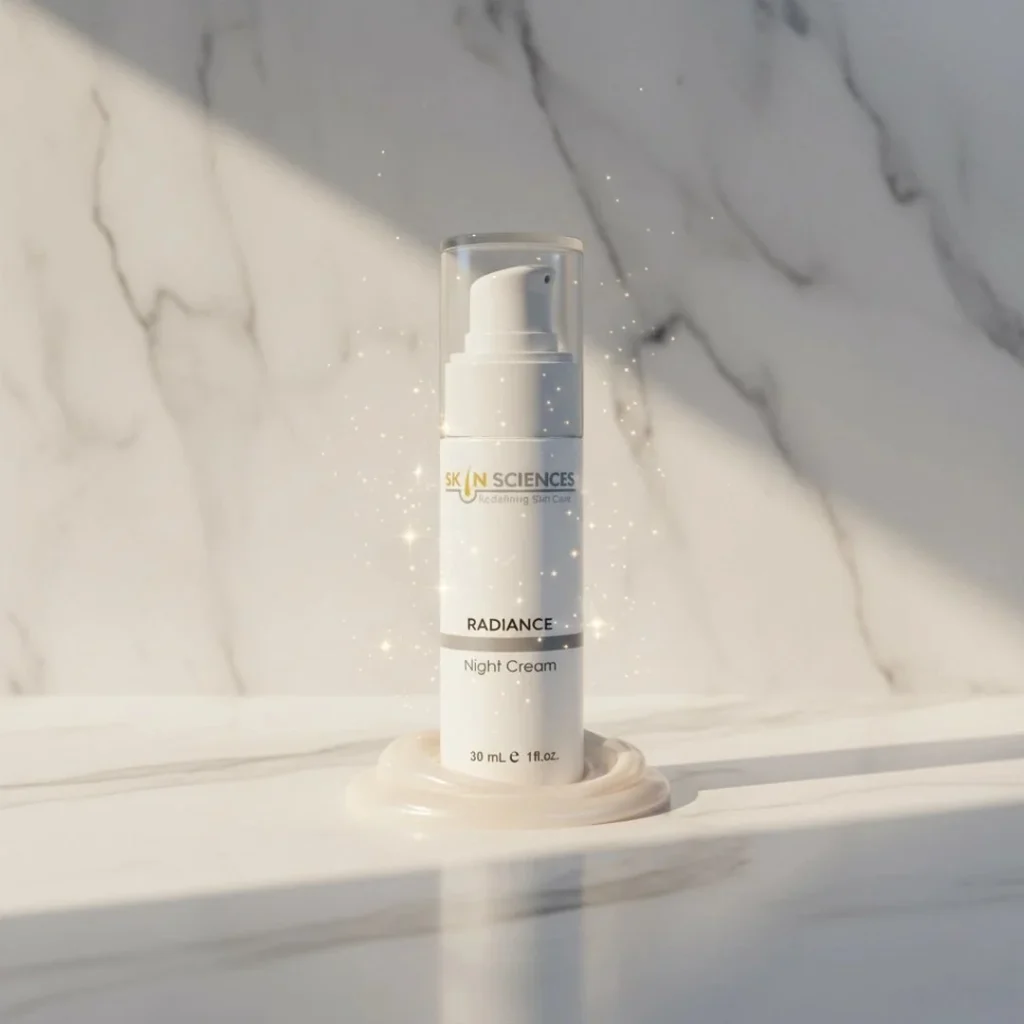
What About Skin Sciences Night Cream?
If you are looking for a moisturizer to include in your nighttime routine, Skin Sciences is one option to consider.
A Skin Sciences Night Cream can be incorporated into a routine focused on maintaining moisture and supporting comfortable, healthy-looking skin overnight.
However, your choice should still depend on your skin type and concerns.
If your skin is oily, you may prefer a lighter texture.
If your skin is dry, a richer formula may be more comfortable.
If you are sensitive or acne-prone, pay close attention to how your skin responds after introducing a new product.
The goal is not to find the thickest cream.
The goal is to find a formula that your skin can tolerate and use consistently.
Common Nighttime Skincare Mistakes That Can Cause Dullness
Sleeping without removing makeup
Leaving makeup and sunscreen on overnight is not a good substitute for cleansing.
Clean your face before going to bed.
Over-cleansing
Washing your face repeatedly can leave the skin feeling dry and uncomfortable.
Using too many active ingredients
Combining several exfoliants and retinoids without a proper routine can increase irritation.
Skipping moisturizer
Even oily skin may need hydration.
Using the same heavy cream all year
Your skin’s needs can change with the weather.
Expecting overnight transformation
A single application cannot reverse months or years of pigmentation, dryness, or sun exposure.
Consistency matters more.
Frequently Asked Questions
Why does my skin look dull when I wake up?
Morning dullness can be related to dehydration, dryness, accumulated dead skin cells, a weakened skin barrier, environmental conditions, or lack of sleep. The exact cause varies from person to person.
Can Night Cream make my skin brighter?
A suitable Night Cream can improve hydration, which may make dry or dehydrated skin look smoother and more radiant. It does not automatically treat every cause of dullness.
Should oily skin use Night Cream?
Yes. Oily skin can still become dehydrated. Choose a lightweight formula that suits your skin and does not feel excessively greasy.
Can I use Night Cream every night?
Many people can use a moisturizer every night. Follow the product instructions and choose a formulation appropriate for your skin type.
Why does my face feel tight after my nighttime routine?
Your cleanser may be too harsh, you may be over-exfoliating, or your skin may need more hydration. Simplifying your routine and using a suitable moisturizer can help.
Can Night Cream remove dark spots?
A basic moisturizer is not necessarily a treatment for pigmentation. Some nighttime products contain targeted ingredients that may help improve the appearance of uneven tone, but results depend on the specific formulation and cause of the pigmentation.
Can sleeping more improve dull skin?
Adequate sleep supports overall health, and research has found associations between sleep quality, skin barrier function, and appearance. However, sleep alone cannot replace a suitable skincare routine.
Should I use a different Night Cream in summer and winter?
You may find that your skin prefers different textures in different seasons. A lightweight formula can feel more comfortable during hot weather, while a richer moisturizer may be useful when the skin becomes drier.
Final Words
Waking up with dull-looking skin can be frustrating, but it does not necessarily mean you need a complicated skincare routine.
Your morning appearance can be influenced by hydration, dryness, your skin barrier, environmental conditions, sleep, cleansing habits, and the products you use before bed.
A suitable Night Cream can help maintain hydration, soften the skin, reduce the feeling of dryness, and support a healthier-looking skin barrier.
But don’t expect a moisturizer to perform miracles overnight.
Start with the basics:
Gentle cleansing → Targeted serum if needed → Night Cream → Good sleep
During the day, remember to protect your skin from UV exposure with appropriate sunscreen.
If you are considering a Skin Sciences Night Cream, choose it according to your skin type rather than simply looking for the richest formula.
Most importantly, give your routine time.
Dull-looking skin is often easier to manage when you stop chasing instant results and start building consistent skincare habits.